
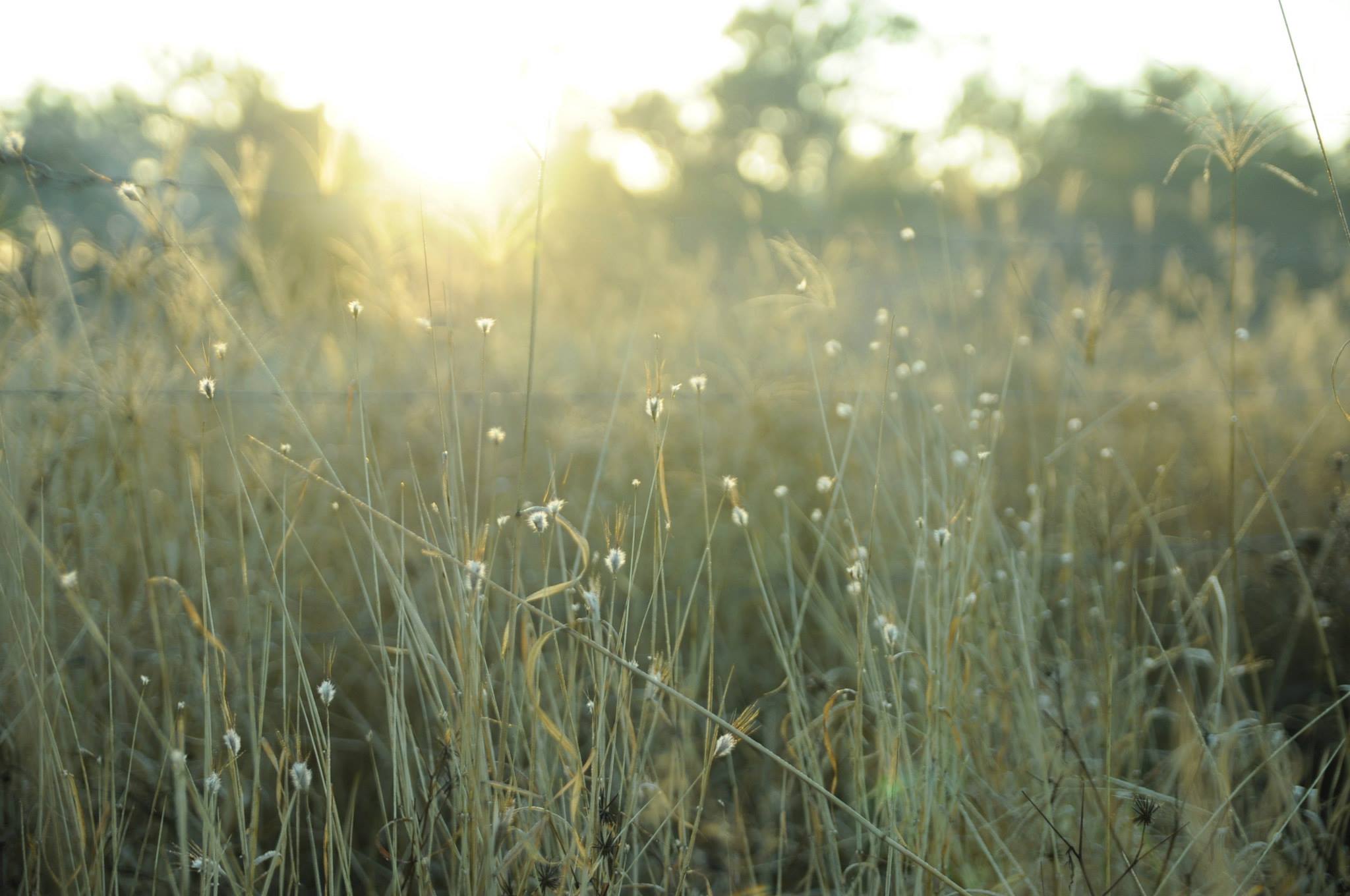
Image by Kate Donnelly
Coal seam gas through the eyes of a QUT Big Lift student
“I don’t think you’re listening. I don’t think anyone is listening.”
Grief can never be simplified to a process. Mourning a loss is more than crying heavy tears that lead to inevitable acceptance. When a life is lost without natural cause or tolerable reason, grief becomes anger.
And that anger cannot be silenced.
The loss of George Bender, a 68-year-old cotton farmer from the Western Downs region of Queensland, has sparked a ripple of reactions throughout the state. Like his family before him, he devoted his life to farming the Chinchilla land sustainably and tenaciously, passing on his knowledge to his wife, four sons and one daughter. His family has stated that he did not suffer from depression or mental health issues: rather, the toll of a ten-year struggle with coal seam gas (CSG) companies led him to take his own life.
Australian farmers face an ongoing battle for rights to their property. George Bender was one of many attempting to stave off the environmental impacts of CSG wells and trying to protect local farmers from coercive government tactics to claim the land. CSG is often described as the “cleanest” fossil fuel, an oxymoron with which many take issue. Mining companies often drill vertical wells into the land to extract the natural gas as an energy source. While corporations are required to secure exploration licenses and then negotiate access with landowners, organisations such as Lock the Gate believe CSG companies are given an elevated position within the law. As a result, landowners can be manipulated by coercive legal tactics that diminish their rights.
George Bender’s daughter, Helen, confronted a panel of politicians and influencers during a special edition of Q&A focussed on rural issues mere days after his passing. Her question grasped the attention and applause of the entire Toowoomba studio audience, and later, viewers nationwide: “When will farmers be given the right to say no to CSG companies coming onto their land?”
The bold question was amplified by the panel’s seeming inability to answer it. Though Helen Bender had spoken, it was undeniable that she felt as though her question went thoroughly unheard. Amid thunderous applause and outcry from the audience, the panel members stumbled their way through answers that dodged the question Ms. Bender fired.
“One of the last things my father said: ‘No one is listening, why are you wasting my time?’ I don’t think the nation is listening, I don’t think any one of you politicians care.”
Such is the power of grief: the transformative anger that can spark a long overdue discussion about the issues impacting regional and rural Australia, unique in both their nature and consequence. Small town communities are known for their resilience but there is only so much community spirit can do in the face of political, economic and environmental turmoil.
The National Rural Mental Health Alliance name numerous stressors country people encounter. A smaller population naturally indicates fewer employment opportunities, unstable income and less financial security. Farmers are almost always self-employed but face greater exposure and vulnerability to natural disasters. In fact, their livelihood can be entirely dependent on the weather conditions of the season.
A November 2014 paper by the Alliance finds that human activities have led to increased climate change and the resulting intensity and variability of weather conditions has direct health impacts for people in rural and remote Australia. Stresses of income loss, property damage or invasion from unwelcome companies are all concerns befalling Australian farmers. The rate of suicide among male farmers has been reported as almost fifty per cent higher than for rural men generally.
In the past, there has been a dangerous trend of policymakers residing in metropolitan areas making industry decisions with no regard for the communities affected. In light of tragedy, Senator Glenn Lazarus immediately urged for a stall in CSG projects until the human impacts could be properly assessed through a royal commission. In New South Wales, the Gloucester Council has begun to speak out against of impacts of AGL’s local coal seam gas project on their community, with Mayor John Rosenbaum directly referring to the loss of George Bender as a reason to consider the “suffering social fabric” of his town.
George Bender’s death leaves a haunting, unanswerable question: given his ongoing and intensive efforts to bring attention to the human impacts of CSG, why did it take the ultimate price to finally ignite a nationwide response? His struggle was never silent; but was anyone ever listening to it?
“In the end, George Bender died from a broken heart,” said the Bender family in a public statement paying tribute to their father. The CSG industry creates division between families and entire communities, but mining is only one of the problems impacting regional towns. For many of us living in urban centres and populated cities, the differences between urban and rural are incomprehensible – and often ignorable. There is an immeasurable gap between city and country; between farmers and office-workers; between Brisbane and the towns that lie mere hours from it.
The life and loss of George Bender is proof that this gap needs to be bridged.
—
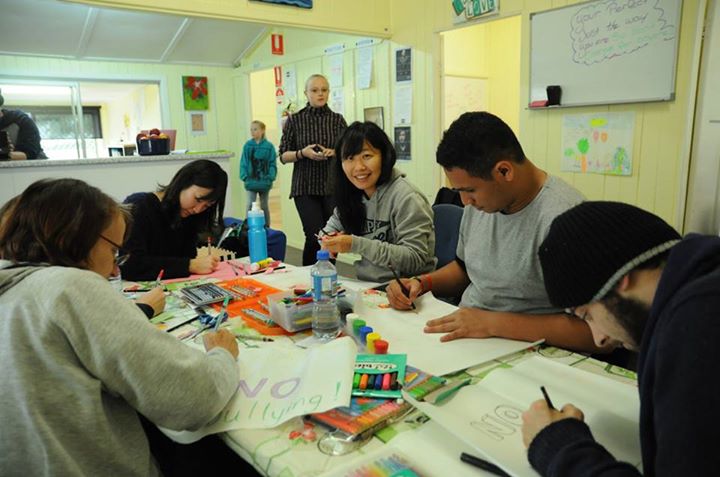
The Queensland University of Technology (QUT) Gardens Point campus is an urban hub. Granted, it is situated adjacent to the Botanical Gardens, but the skyscrapers are still visible and the sounds of traffic and city life are still audible.
In 2010, a couple of university students were inspired by a volunteering collective based at the University of Technology Sydney called “The Big Lift”. QUT Big Lift was born out of an identified need to engage university students with regional towns. Each year, student leaders in our not-for-profit group organise week-long volunteering road trips to Queensland communities. The heart of the project remains unchanged: to understand the strong connection regional Queenslanders have with the land that they live on, to learn from their stories and to incorporate our understanding of their experiences into daily life upon returning home at the end of a weeklong journey.
In July of this year, QUT Big Lift ventured west for the first time to visit four towns in the Surat Basin, home to Australia’s largest CSG reserves: Dalby, Yuleba, Injune and Chinchilla. We were warmly welcomed by community members willing to help us understand their daily life. Over the course of the trip, we had heard perspectives on CSG from numerous sources: Arrow Energy in Dalby, community leaders in Injune and locals in Yuleba.
In Chinchilla, the last stop on our seven-day journey, we heard from everyone. Professionals from local businesses, the media and mining companies welcomed us upon arrival. Our questions about the fluctuating local economy were answered. The wavering investments from mining and gas companies were cited as a key contributing cause. The cost of living skyrocketed when the industry was booming and residency in Chinchilla was a hot commodity. Families with younger children and older residents struggled to keep up with the rising costs instigated by landlords and business owners. One community member gave an example of changes made to the local school bus route. Empty seats indicated families were forced to leave the town or face economic turmoil.
The next morning, the Queensland Gas Company (QGC) gave us a presentation on their operations in the Western Downs Region and detailed their strategies to minimise any negative community impact. These included preferential employment of local people and making financial contributions to the once booming demand for local housing; developments which are now empty due to the industry downturn. QGC took pride in emphasising that coal seam gas was the “cleanest” of all fossil fuels, and their plans for community contribution and growth seemed infallible when displayed in a corporate presentation.
Later that day we had another opportunity to talk to community members whilst gardening and tidying at the Western Downs Youth Hub. The hub is run by volunteers hailing from a number of professions. It became clear that CSG pervaded every resident’s life.
We heard about organisations such as Lock the Gate, a community organisation dedicated to protecting Australian agriculture from “inappropriate mining”, and Bridging the Divide, another Brisbane-based not-for-profit group focused on enhancing urban-rural relations. Lock the Gate broadcasts their message through any medium accessible: local media, social media and direct communication with political figures.
There has never been silence in the towns that face the instability and intrusion imposed by the mining industry. What we learned was that in many cases, there has been a refusal from political leaders and corporations to listen to the voices of those affected. The priority has been on expanding the industry to export the mined gas internationally. Tens of thousands of jobs have been lost in regional Queensland due to the mining downturn and BIS Shrapnel has forecasted another twenty thousand job losses over the next three years. The houses that companies had been so eager to develop and fill with a temporary workforce line empty streets of Chinchilla. Residents pointed them out to us as we walked through the town.
During our time out west, we learnt that regional towns such as Chinchilla are resilient in the face of adversity and harness their hardships into strategies to lessen the “human impact” of coal seam gas that has manifested in its cruellest, most tragic form.
We never met George Bender or any of his family members, but his name was mentioned as one of many farmers fighting for the rights to the farm his family has called home for five generations. The value of a home is something we have learnt throughout our years of Big Lift trips. Our bus carrying forty students became our home for over a week, and each community welcomed us into their town as though we were, once again, returning home.
In winter of next year, QUT Big Lift will return to the Surat Basin. In the meantime, we are anxious for an answer to Helen Bender’s question that satisfies those struggling most under the burden of a weighty industry: when will farmers be given the right to say no to CSG companies? When will people begin to listen to their reasons for wishing to do so? Regional Queensland is creating more noise than ever in an uproar of protest against the cost of CSG. The conversation must continue when the shouting dies down.
___________________________________________________________
If you ever need support, contact Lifeline on 13 11 14.
Since our inaugural journey in November 2011, QUT Big Lift has expanded its presence both on the university campus and beyond. We have an alumni chapter and aim to engage people of all ages, disciplines and nationalities.
demos journal acknowledges the Ngambri and Ngunnawal people on whose lands this journal is made and imagined. Sovereignty of these lands was never ceded. Always Was Always Will Be Aboriginal Land.
Web Design by Rio Ramintas
Build by Charlotte McLachlan
demos journal © 2026. All Rights Reserved.


