
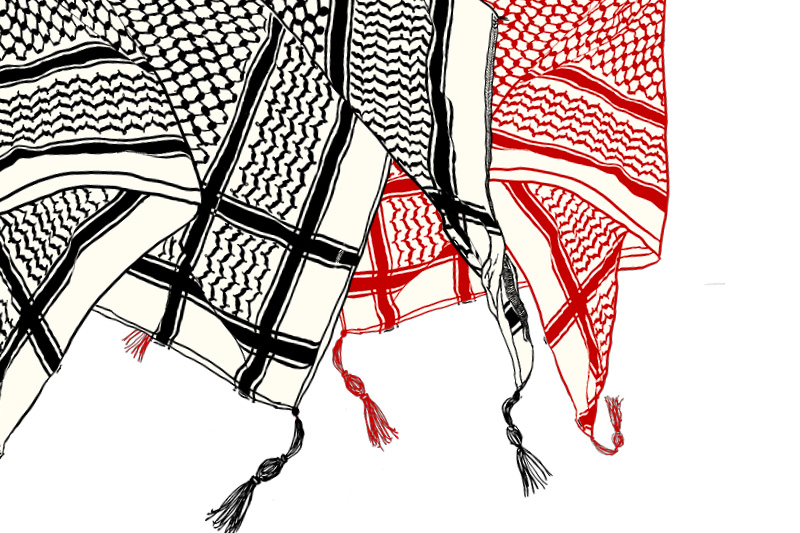
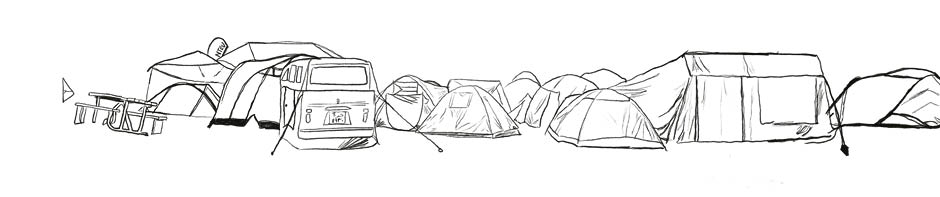
On the 29th of April 2024, ANU students met on the ANU Student Association balcony and voted to establish the Gaza Solidarity Encampment. Hours later, tents were raised on Kambri lawns in solidarity with a wave of student encampments across this continent and around the world. What followed was not simply a protest site, but a living community: a space of political education, mutual aid, cultural practice and collective resistance.
The Encampment existed in the shadow of a long history of Indigenous collective resistance, from which it had much to learn. First Nations people on this continent have famously organised encampments, most notably the Aboriginal Tent Embassy, as a powerful form of resistance to the white settler colony. It was critical that Gaza solidarity encampments, particularly the camp at ANU, build solidarity with the ongoing struggle of Aboriginal and Torres Strait Islander peoples, and Encampment organisers remain committed to doing this work. It is also important to acknowledge that the task of building solidarity with Indigenous liberation is never finished and there is much more that can, and should, be done.

This issue brings together raps, essays, interviews, reflections and analyses from students, academics and community members who experienced the Encampment in different and deeply personal ways. It does not claim to represent every perspective, nor to exhaust the complexity of camp life. Rather, it offers a brief snapshot of what was lived, built and upheld over those
110 days.
Throughout the issue you’ll find pieces written by Battikh 🍉, representing several participants and contributors who have chosen to remain anonymous. Their contributions include providing the Encampment’s demands, a comparative timeline of the 110 days of the Encampment and those of genocide in Gaza, a creative recount of one of the camp’s daily meetings, and interviews conducted with ANU academics and Palestinian community members who supported the camp.
Students and staff have shared their experiences of the Encampment in different ways, including: direct contribution to sustaining camp, teaching and learning support for staff and students, and mobilisation of the union movement. Evan Meneses reflects on his personal motivations for participating in the camp and the self appointed roles he took on to contribute to the continuation of the camp. Romola Nolan explores the growing imperial hegemony of the military industrial academic complex embedded in our institutions. Nick Reich recounts his ‘disciplinary’ meeting with ANU Deputy Vice-Chancellor offering a critique of the ANU’s response to Palestine solidarity protestors. Beth Marsden and Ben Silverstein reflect on their teach-ins at the Encampment and how learning and solidarity take place during a genocide like that committed by the zionist entity. Lachlan Clohesy provides reflections of his overnight stay at the camp and the role of the National Tertiary Education Union’s support, republished for this issue. Anna Denishensky contributes two pieces exploring her identity as an anti-zionist Jew and the ostracisation she faced on campus from zionist staff and students.
Many amongst the university’s staff and wider community also played direct roles in supporting the Encampment. Nick Cheeseman, Tamara Jacka, Elise Klein and Sango Mahanty (the ‘mediation team’) reflect on their experience as the group of academics who mediated on behalf of the camp in attempts to negotiate with ANU executives for divestment. Elise Klein explores the position of academics within the academy and collective failure to speak out against ongoing genocide. Khalid Al Bostanji conducts a series of interviews with Palestinian community members who reflect on their experience of the camp as key supporters and on the conduct of the university in responding to student protests. He also interviews an ANU academic from outside the mediation team to document the broader experience of staff and their own engagement with the university’s executive.
Some reflections from ANU students and community have engaged more deeply with the context that shaped the Encampment, the genocide in which ANU is so complicit that it invests directly in the military complex allowing atrocities to be committed. Muhammad Ali explores how the university prioritises profits over people, speaking to the university’s ‘socially responsible investment’ policy and their continued investments in weapons. Jemma Abdilla explores how the university’s disjointed teaching of humanitarianism compares to the daily practices of empowerment, solidarity and humanity exhibited at the Encampment. Mahdi Souweid contributed a series of songs and raps, four of which are spread throughout the issue. His raps explore feelings of pain and trauma as he witnesses livestreamed genocide at the age of twelve.
Other reflections on the Encampment deal with the university stepping up its crackdown on political expression in recent years. Maeve Powell delves into the history of student protest at ANU and the role of the Encampment creating spaces of connection between ‘town and gown’. Siân H explores creativity and artistic expression embedded within the Encampment against the backdrop of ANU’s repression of pro-Palestine artistic expression. Aleesya Amirizal speaks about the BIPOC Department’s experience of the university’s racism in the last two years, its attempts at suppression and its threats to autonomy and political expression due to the Department’s Palestine advocacy. Pip Grimshaw and Mio collaborate to explore the creation of spaces and community through art at the Encampment.
The issue also reflects on the bigger picture of what the Encampment achieved. Asaf Ali Lone compares his own experiences in Indian occupied Kashmir to tactics used by the university against the Encampment. Sara Abdelmawgoud ends the issue with an essay exploring the role of civil society at the Encampment, and the community support that sustained the camp throughout its 110 days of protest.
The purpose of documenting this moment is both historical and political. On one hand, it is a rare opportunity to record what happened from the perspectives of people who sustained the protest and experienced the Encampment to fight back against zionist attempts to erase this record. The university worked persistently, and continues to work, to delegitimise, minimise and erase this brief but profoundly important chapter in ANU student history. Against that erasure, this archive insists on memory. Documenting the Encampment is also an opportunity to highlight the kind of anticolonial politics espoused by such protests. These politics have arguably gained their greatest level of popularity with the tide of global solidarity turning in favour of Gazans and the Palestinian struggle more broadly. The anticolonial politics of the Encampment also exposed students to the politics of Arabs and Palestinians themselves, giving them greater appreciation for liberation struggles globally and steadfastness in their protest locally.
Contributors to this issue have participated with courage and at real personal risk, aware of the pressure that the zionist lobby and institutional actors can mobilise against critics of settler colonialism and violence. Concerns for safety, welfare, and institutional retaliation were carefully considered throughout the making of this publication. Still, the responsibility to tell the truth of the Encampment, and to defend both its legacy and the people who built it, outweighed those risks. The risk of having antisemitism weaponised against this issue by the zionist lobby is equal to that faced by the Encampment itself. But we know that these attacks are a distraction from the issue at hand.
Above all, this issue is a historical record, a testament to those who stand in solidarity with Gaza and refuse the silence that structures complicity. It is an act of remembrance, documentation, and continuation, part of the broader struggle for Palestinian and Indigenous liberation, and part of the ongoing story of resistance on Aboriginal Land.
From The River To The Sea,
Always Was Always Will Be.
demos journal acknowledges the Ngambri and Ngunnawal people on whose lands this journal is made and imagined. Sovereignty of these lands was never ceded. Always Was Always Will Be Aboriginal Land.
Web Design by Rio Ramintas
Build by Charlotte McLachlan
demos journal © 2026. All Rights Reserved.


