
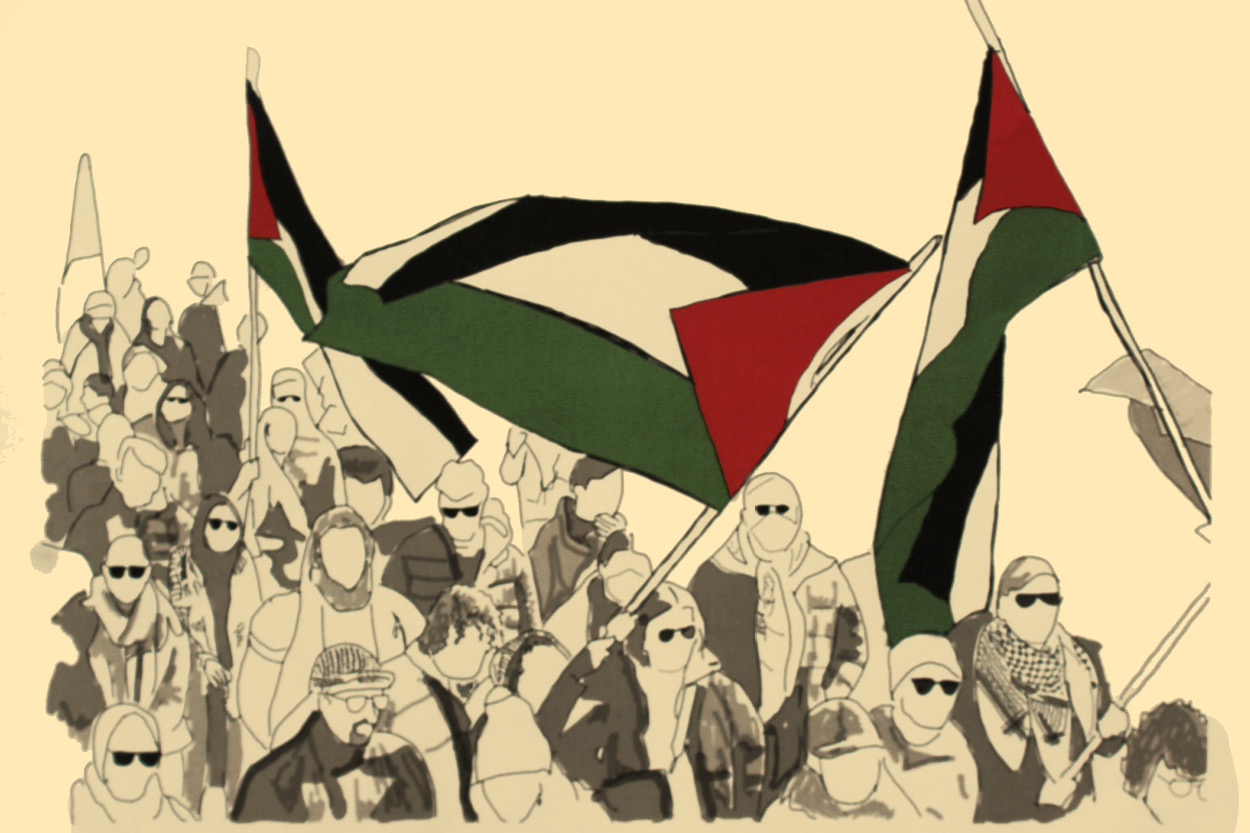
Interviewer: Khalid Al Bostanji
This is another interview for the special issue of demos journal on the ANU Gaza Solidarity Encampment. I interviewed an academic here in Canberra who brings a unique perspective on the encampment.
Khalid: We discussed beforehand the question of identification in the publication. Many contributors in this issue have chosen to remain anonymous, so we will follow that approach without needing to rehash it. With that settled, I’d like to begin by inviting you to introduce yourself in a way that maintains your anonymity.
Interviewee: I’m an academic at the Australian National University, and I’ve been here in various capacities for about eight years now.
K: You mentioned you were here during the time of the encampment. Did you have direct experiences with it, or mainly indirect ones?
I: I had both, but more indirect than direct. My most significant direct experience was on the day the university was preparing to dismantle the encampment and bring in police. I was present from early in the morning and witnessed how the situation unfolded between the university and the students. I also observed academics acting as informal intermediaries between the encampment and the university.
My indirect experiences came through many conversations with colleagues and others who were directly involved, both during and after the encampment, and I’ve seen how their views of the university, and of activism inside the university, have evolved since then.
K: could you expand on that, particularly on what you observed in terms of how the university handled activism?
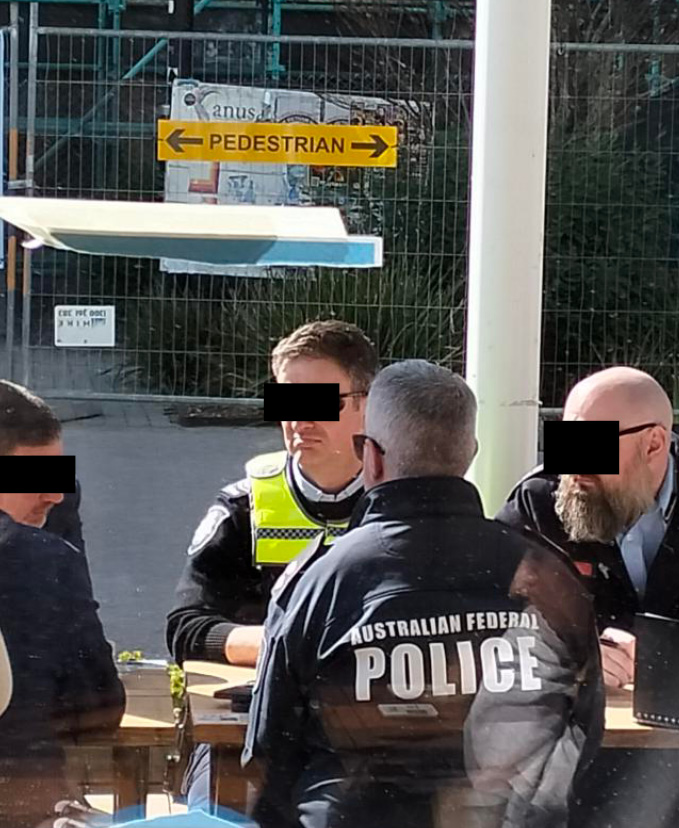
I: what became very clear is that the university has no real regard for student activism, especially when it concerns Palestine. The administration appears comfortable with certain types of activism, the kind they consider safe or aligned with mainstream expectations. For example, if this had been a climate justice encampment, I’m certain it would have been treated differently.
But because it was about Palestine, the response was immediately securitised. The university leadership’s personal beliefs, Australia’s political alignment with Israel, and a deep misunderstanding of the Palestinian cause all fed into this reaction.
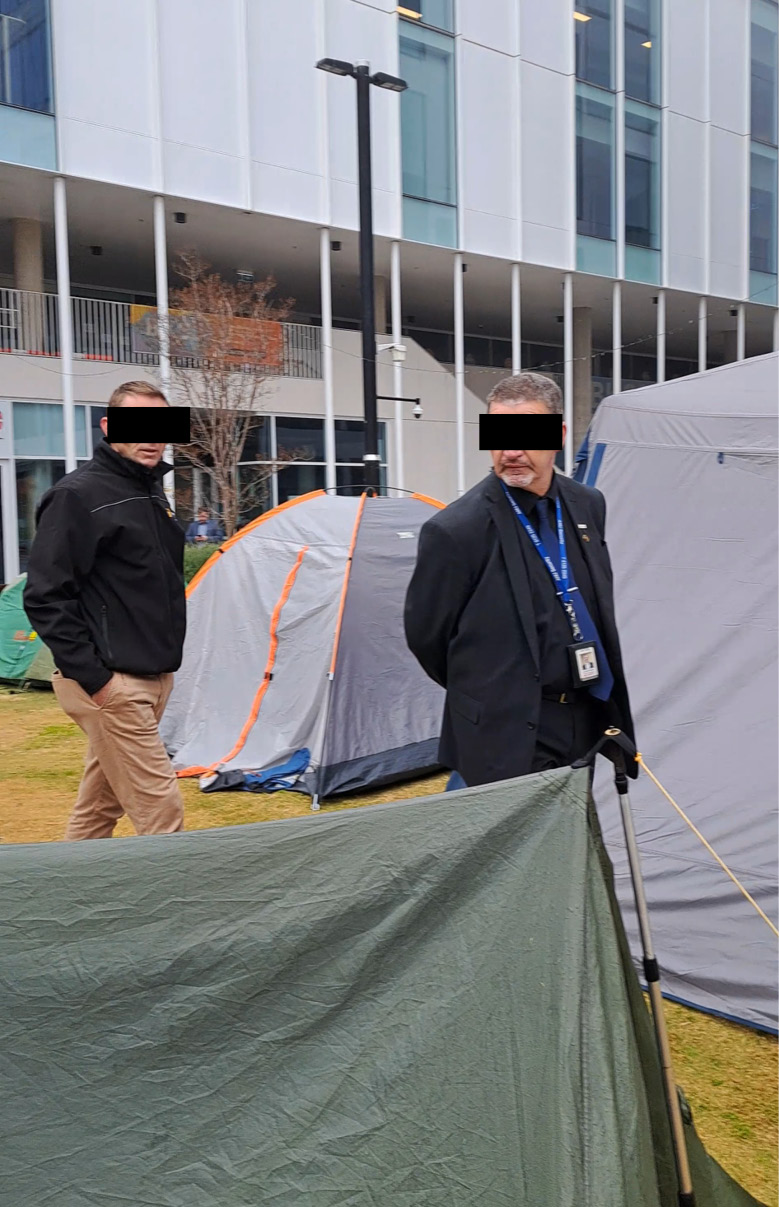
On the morning I mentioned earlier, I arrived around 7:30 or 7:45 a.m. There were only a few campers present after spending the night, but the space was surrounded by about a dozen private security guards I had never seen before. Their presence was hostile, they were standing in formation behind the head of ANU security, as if prepared to move in. They invaded people’s personal space and were visibly intimidating, which made it clear this was not about safety but about pressure.
This was not an isolated incident. From early on, the university circulated emails portraying the encampment as a security risk or a psychosocial hazard, and even implied that the Palestinian flag itself was offensive. All of this set the tone for delegitimising the movement from the outset.
K: and in terms of the people participating?
I: the university engaged in sustained psychological pressure and harassment of the students most visibly involved in the encampment. The strategy seemed to be to frighten them into ending it themselves, without needing to call the police or take formal disciplinary action. When this approach didn’t work, the university escalated to threats of shutdown. And when that failed, it turned to narrative delegitimisation, trying to suggest the students didn’t represent the wider community.
They never engaged in good faith. They treated the movement as something to be neutralised rather than understood.
K: you mentioned earlier that many of those affected most were Palestinian, Arab, or Muslim staff or students.
I: yes. Staff from Arab or Muslim backgrounds, especially those identifiable by name, mostly kept their distance out of fear for their positions. It wasn’t due to lack of support, but because the university made it clear early on that this movement was unwelcome. The so-called neutral mediators between the university and the students were mostly academics who were institutionally safe to be seen in that role. Meanwhile, those most personally affected by Palestine were structurally discouraged from taking any visible position.
This is part of a wider pattern. The university has structural racism baked into its operations, particularly toward Palestinian and Arab perspectives, and that climate existed long before the encampment.
K: and your view of the encampment overall?
I: despite all that, I think the encampment was a success. The very fact that it existed in Canberra, a small, politically cautious city, and lasted as long as it did is remarkable. In cities like Sydney or Melbourne, where there are larger migrant communities and more visible solidarity, it might be expected. But in Canberra, at ANU specifically, it went against the grain, which makes its impact more significant.
Where the failure lies is with the university, not the encampment. The institution refused to listen, refused dialogue, and refused even symbolic gestures like divesting from weapons manufacturers, something it had done immediately in the case of Russia without hesitation. So the outcomes that feel unfinished are failures of the institution, not the movement.
What the university did learn was how to securitise public space more effectively. It responded not by self reflecting, but by restricting future protest.
K: and in terms of your memories of the encampment?
I: the most meaningful memory to me is the solidarity that emerged, the way the wider Canberra community gathered around the students, and the way the encampment humanised the campus. It reminded people that a university is supposed to be a space of conscience, not just compliance. Even if the administration refused to see it that way, the students demonstrated what moral clarity looks like.
demos journal acknowledges the Ngambri and Ngunnawal people on whose lands this journal is made and imagined. Sovereignty of these lands was never ceded. Always Was Always Will Be Aboriginal Land.
Web Design by Rio Ramintas
Build by Charlotte McLachlan
demos journal © 2026. All Rights Reserved.


