
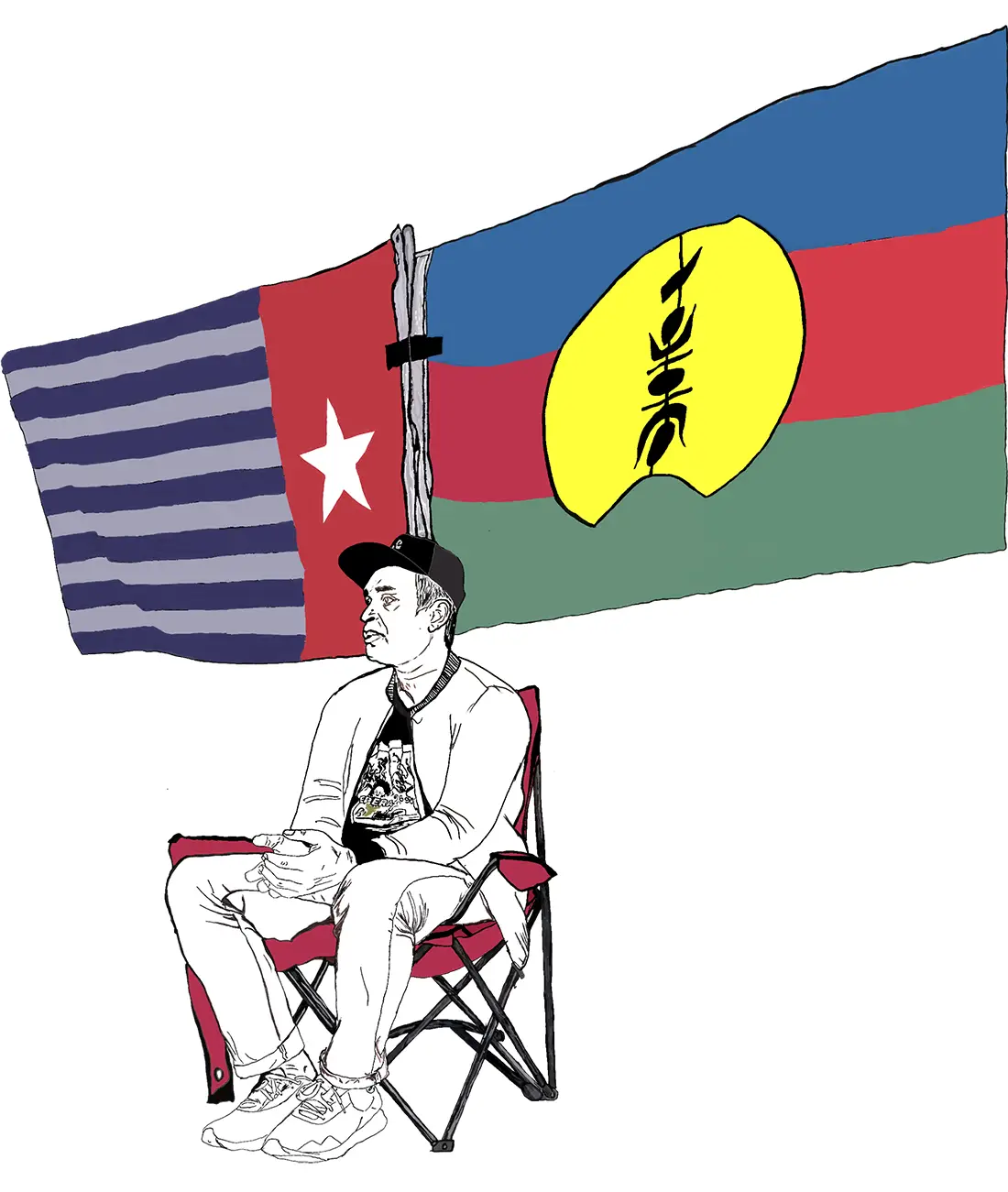
Writing this on stolen Ngunnawal and Ngambri Country, where mass over-policing, youth detention, and deaths in custody are features of a system designed to dispossess. It is clear that Indigenous resistance to the ongoing project of colonisation is daily and structural, and I witness this everyday with indigenous family, friends and colleagues who continue to work, live and exist within the system that oppresses them.
As an Oromo, whose family has resisted Abyssinian (Ethiopian) colonisation for the past two centuries, my people’s struggle was always met with international silence. The Abyssinian Empire resorted to marginalisation, economic exploitation and cultural domination to overpower us and turn us into colonial subjects. Oromo resistance was, however, part of a wave of liberation movements in the Horn of Africa in the late 1900s. As evidenced by literature and memorandums written at the time (see the example attached to this essay), the Palestinian and Oromo struggles were inherently connected. Palestinian liberation saw itself in Oromo liberation, and vice versa.
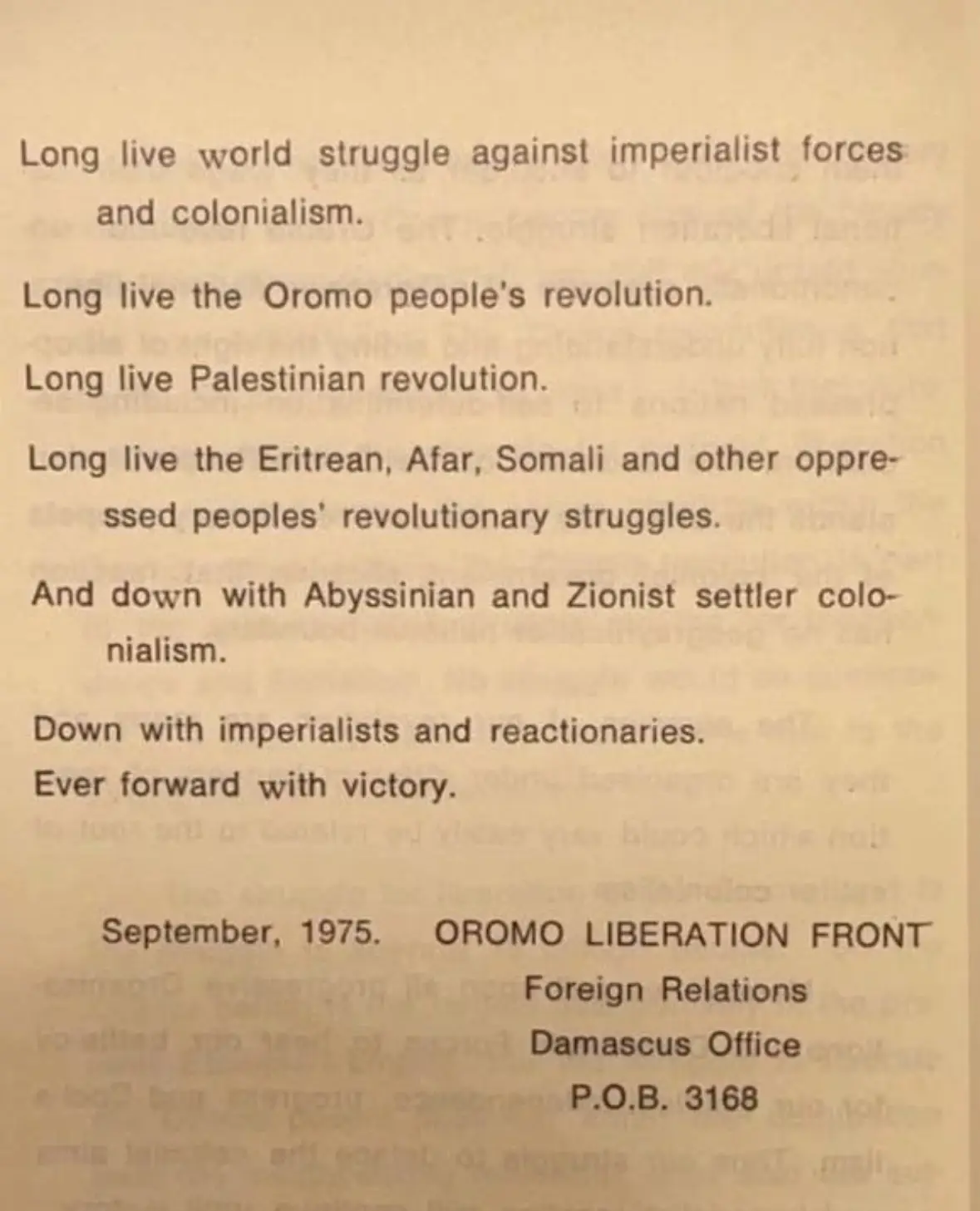
It is clear that the Oromo and Palestinian struggles for self determination do not exist in isolation. It is part of a long history of global anti-colonial, anti-imperial, and Indigenous liberation movements. Approaching Palestine through an intersectional lens allows us to understand how race, indigeneity, displacement, and empire intersect to shape lived experiences of oppression and resistance.
Across the 20th and 21st centuries, national liberation movements have fought systems of colonial domination, apartheid, and foreign occupation. From Algeria’s anti-French resistance and the South African struggle against apartheid, to Ireland’s movement for independence and Timor-Leste’s fight against Indonesian occupation, these struggles emerged from distinct contexts yet shared common aspirations: land, dignity, sovereignty, and the right of self determination.
Today, the Palestinian liberation movement is deeply connected to ongoing struggles across the world. The fight for freedom in West Papua against Indonesian occupation, Kanaky (New Caledonia) against French settler-colonial rule, Kashmir under militarised Indian control, Sudan and the Congo under violent conflict fuelled by imperial extraction. The enduring struggle of Indigenous peoples on these lands against invasion and ongoing settler-colonialism, all reveal the persistence of colonial violence in contemporary forms.
Solidarity across movements is not symbolic; it is strategic and necessary. These struggles expose the shared architecture of colonialism, militarism, racial capitalism, and resource extraction that continues to shape global power. To stand for Palestinian liberation is therefore to stand with all peoples resisting dispossession and fighting for land, culture, and sovereignty. Their victories and setbacks teach us that liberation is rarely linear, but collective struggle, shared learning, and transnational solidarity strengthen our capacity to resist.
The Gaza Solidarity Encampment on the campus of the Australian National University was built to call for an end to genocide in Palestine but it also became a living space of intersectional solidarity. It brought students and community members together to recognise and uplift connected liberation movements, including those of West Papuans, Kanaky communities, Kashmiris, Sudanese and Congolese peoples, and First Nations peoples on this continent. In doing so, the camp affirmed a core principle: Always was, always will be Aboriginal Land!
demos journal acknowledges the Ngambri and Ngunnawal people on whose lands this journal is made and imagined. Sovereignty of these lands was never ceded. Always Was Always Will Be Aboriginal Land.
Web Design by Rio Ramintas
Build by Charlotte McLachlan
demos journal © 2026. All Rights Reserved.


